Team
Prof. Ilana Berman Frank
Director of the Leon H. Charney School of Marine Sciences since 2018.
Research at our laboratory is dedicated to understanding how global changes and environmental stressors influence the organisms forming the base of the aquatic food-webs, at local to the global scales, from Lake Kinneret to the Mediterranean and Red Seas, to the South Pacific Ocean. Other research projects at the laboratory are relevant to the local marine environments of the eastern Mediterranean Sea, and include examining the impacts of discharges from the rapidly expanding
desalination industries on coastal populations; and determining carbon export to depth via the first deep-water tethered mooring in the Levantine basin of the eastern Mediterranean Sea (DEEPLEV).
I am currently co/coordinating (with Erich Achterberg – GEOMAR)- the Helmholtz International Laboratory – “The Eastern Mediterranean Sea as a model for Future Ocean Research (EMS FORE)” a 5 year project comprised of a core group of 17 scientists and ~ 10 graduate students from the University of Haifa and GEOMAR Helmholtz Centre for Ocean Research Kiel (Germany). The overarching aim of this project is to utilize the eastern Mediterranean Sea, from coastal to deep ocean, as a natural laboratory to gain mechanistic and quantitative understanding of biogeochemical and ecosystem transitions of a future (sub)tropical ocean (covering 40% of global ocean) affected by global warming and other anthropogenic pressures.

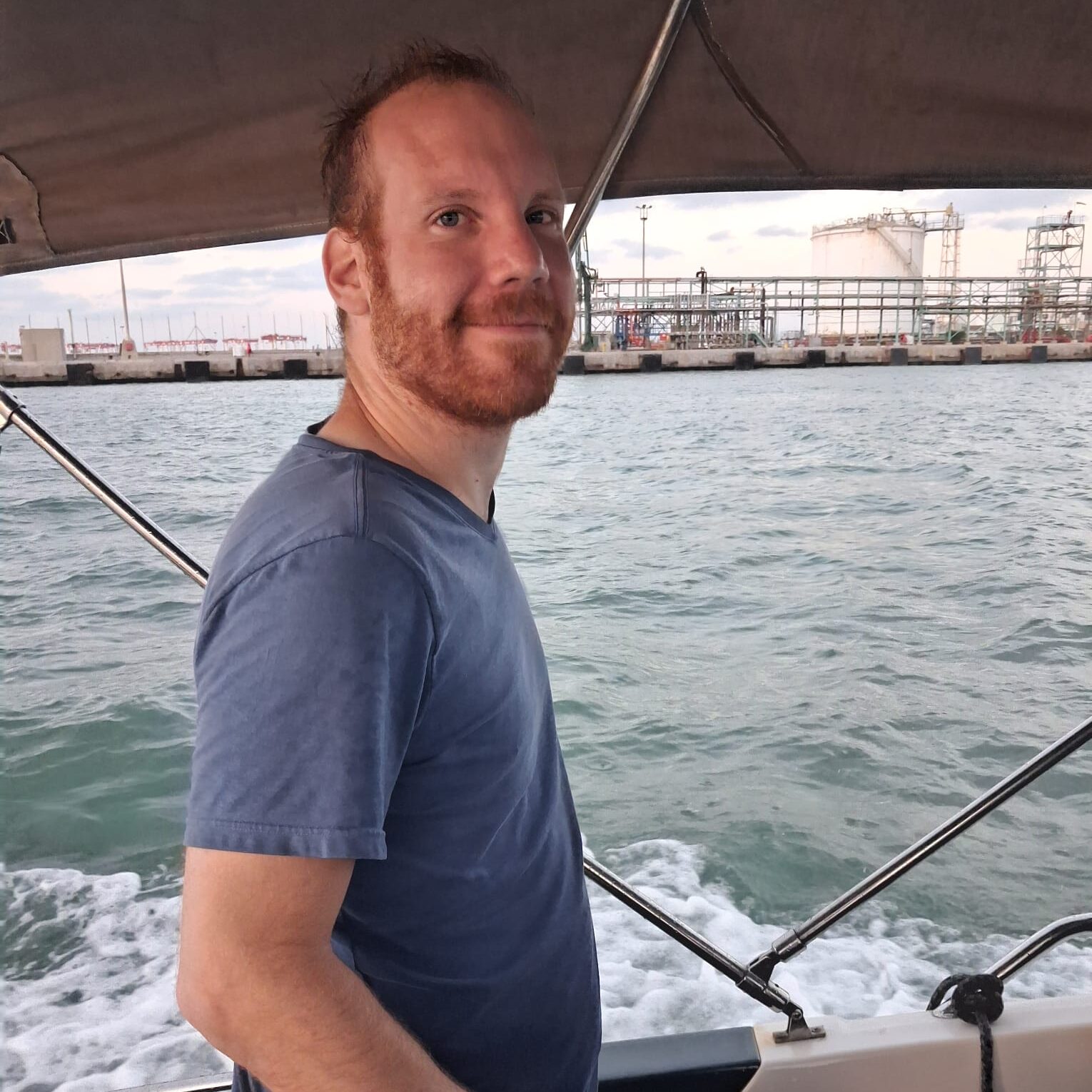
Mr. Barak Silberman
Lab manager
As IBF's lab manager my job is to help students in their research projects, establish new experimental systems, and maintain the lab as a very efficient research facility.
Read more
I study different aspects of the biogeochemistry of nitrogen in the oligotrophic ocean.
I use the unique oceanographic characteristics of the Gulf of Aqaba as a natural laboratory for simulating processes in the oligotrophic.
My research focuses on:
- Contribution of N2 fixation to new production during winter mixing and summer stratification.
- Nitrogen sources and sinks in the northern Gulf of Aqaba using 15N field measurements.
- Marker genes assessment of Trichodesmium diversity.
My work involved field experiments (many hours offshore), followed by laboratory work including stable isotopes analysis, the use of advanced molecular techniques, and bioinformatics.
Contribution of photic and aphotic N2 fixation to production in an oligotrophic sea.
Contribution of photic and aphotic N2 fixation to production in an oligotrophic sea

Alon Blachinsky,
phD student
Morris Kahn Research Station, Dept. of Marine Biology, Charney School of Marine Sciences.
Research title: Seasonal pattern of inorganic and organic nitrogen uptake by phytoplankton in the Eastern Mediterranean Sea
Read more
In the ultra-oligotrophic Eastern Mediterranean Sea (EMS), dissolved organic nitrogen (DON) may be critical for sustaining primary productivity, particularly during nitrate and ammonium depleted periods. Urea is part of the DON pool and a known bioavailable organic form of nitrogen.
My project is to determine urea’s relative potential availability and in-situ uptake rates compared with ammonium and nitrate, during contrasting seasons of nitrate repletion and depletion in the EMS.

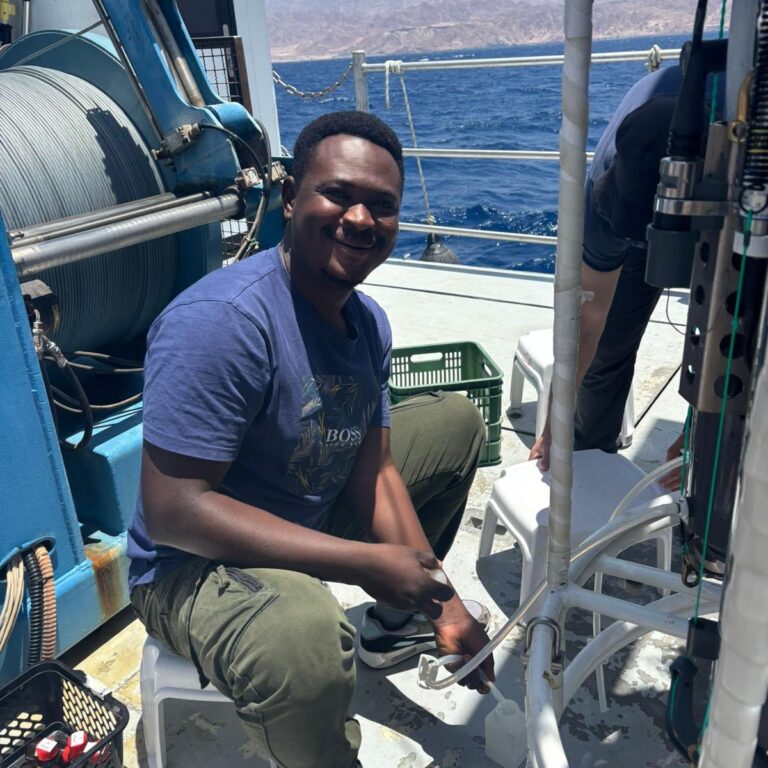
Mukaila Alhassan
Research title: Insights into methane production by marine photosynthetic organisms: diazotrophic cyanobacteria
Read more
Marine photosynthetic organisms, including diazotrophic cyanobacteria and seaweeds, play a fundamental role in global carbon cycling through the fixation of carbon dioxide. However, emerging evidence suggests that some of these organisms can also produce methane under oxygen-rich conditions, challenging traditional views of their role in climate regulation. While methane production has been linked to photosynthetic activity, the underlying mechanisms and environmental drivers remain poorly understood. My research investigates how future ocean conditions and nutrient availability influence the metabolic coupling between carbon fixation and methane production. Through a combination of laboratory and field experiments, I aim to uncover the physiological and molecular processes involved using transcriptomic and proteomic approaches. This work will improve our understanding of the contribution of marine primary producers to greenhouse gas cycling and ocean-climate feedback.

Lior Shak
Research title: Photophysiological Assessment of Phytoplankton from the Eastern Mediterranean Sea (EMS)
Read more
My research focuses on the spatial and temporal variability of phytoplankton photophysiology in the Eastern Mediterranean Sea (EMS). I examine how differences between cyclonic and anticyclonic gyres shape patterns of primary producers. Using Single Turnover Active Fluorometry (STAF), I assess photosynthetic rates and PSII activity. This work aims to improve our understanding of primary productivity patterns in oligotrophic marine systems.

Hila Fishov
Research title: Exploring the changes in RNA expression, in the context of methane production, in Trichodesmium erythraeum IMS101, during the diel cycle
Read more
My research investigates the molecular mechanisms underlying methane production in the cyanobacterium Trichodesmium IMS101. By combining molecular and bioinformatic approaches, I aim to identify the genes and pathways that contribute to this process. This work aims to provide a molecular-level understanding of the “methane paradox”-the production of methane under aerobic conditions.

Merav Gilboa,
PhD student
co-supervisors : Dr. Tamar Guy-Haim and Dr. Ayah Lazar (Israel Oceanographic and Limnological Research Ltd.)
Research Title:
Cyclonic and anticyclonic eddies as habitats for zooplankton
in the Southeastern Mediterranean Sea
Read more
Ocean eddies affect climate by transporting and mixing heat, carbon, and nutrients. Cyclonic eddies in the Northern Hemisphere have a counterclockwise rotation with a slow vertical upwelling flow, while anticyclonic eddies rotate clockwise with a vertical downwelling flow. Eddies in the Southeastern Mediterranean Sea have lifetimes that affect plankton communities and allow for detection of changes in composition.
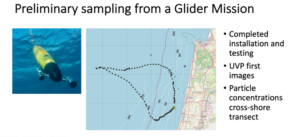
My research will characterize the variability, physicochemical attributes, and biology of eddies using a multidisciplinary approach, including satellite data, research vessels, autonomous gliders, and camera-based vision profiler, to better understand their ecological impact and how they can potentially support sensitive species or facilitate the arrival of alien species.

Tom Reich,
post-doctoral fellow
Research Limnological & Oceanographic Israel (IOLR)
Research title: The Role of Dark Bicarbonate Fixation in Oligotrophic Regimes; The SE Mediterranean and Red Seas as Case Studies
Read more
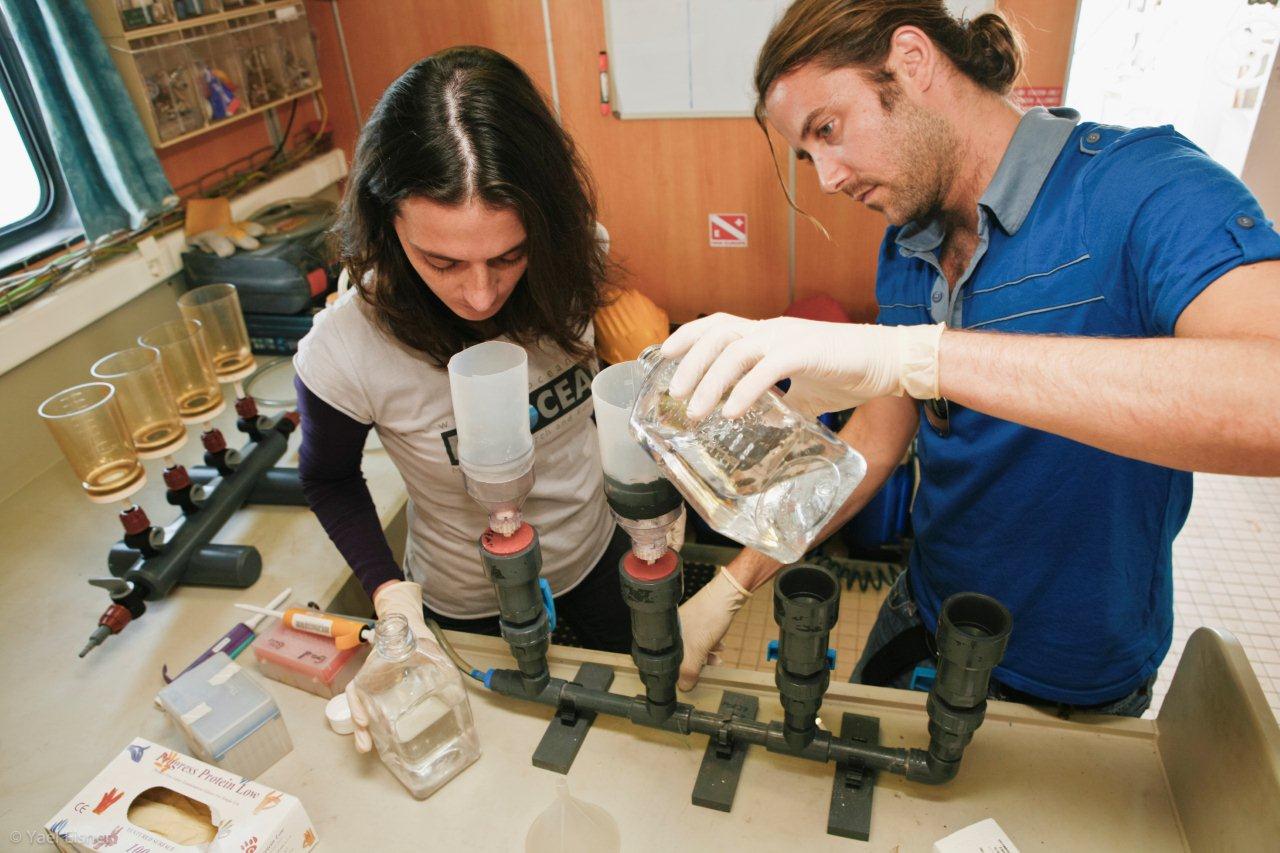
My research in the field of biological oceanography deals with primary production in the ocean. Specifically, carbon fixation that is not mitigated through photosynthesis by photoautotrophs, but by chemoautotrophs via alternative metabolic processes. My study sites concentrate on low nutrient low chlorophyll areas such as the East Mediterranean and the North Red Sea.
https://www.sciencedirect.com/science/article/pii/S0967063722000334

Past team members:
Dr. Netta Holland: Lab manager 2021-2024
Dr. Dina Spungin : lab manager 2018-2021
Dr. Hila Elifantz : lab manager 2013-2018
Past students and Post-doctoral Fellows:
Etai Landou,” MSc 2026 Spatial and temporal dynamics of Nitrogen transformations in the Gulf of Aqaba (Eilat)”
Tslil Bar, phD 2026,
“The contribution of primary production to export flux in the Southeastern Mediterranean Sea.”
Iris Preiss, phD 2026,
“Risk Assessment of the Alien Sea Urchin Diadema setosum Invasion to the Warming Mediterranean Israeli Rocky Reef: Abundance, Temperature, Vulnerability and Ecological Impacts.”
Ronen Alkalay, phD 2025,
“Particulate carbon export in the Levantine Basin (East Mediterranean Sea).”
Tal Ben Ezra, phD 2025,
” A Deeper Understanding of the Biological Drivers of Nutrient Cycling in the Eastern Mediterranean Sea and its Implications on Primary Productivity.”
Alex Wajnerman, MSc 2022,
“Colony formation in Trichodesmium facilitates the maintanance of key physiological processes under nutrient limitation”
Ynon Deutsch, PhD 2022,
“Algal endophytes as biological control agents against pathogens and pests in aquaculture”
Yael Tzubari, PhD 2020,
“Colony formation in Trichodesmium“
Dina Spungin, PhD 2018,
“Programmed Cell death pathways in Trichodesmium“
Nurit Amitai, MSc 2018,
“Effects of Antiscalants from Seawater Desalination Discharges on Coastal Bacterial and Phytoplanktonic Communities of the Eastern Mediterranean Sea”
Liel Magnezi, MSc 2018,
“Trichodesmium bloom formation”
Dan Miller, PhD 2018,
“Assessing the physiological and compositional response of coastal microbial populations to increased pCO2 and to eutrophication”
Natasha Belkin, PhD 2016,
“Impacts of seawater desalination discharges on coastal bacterial and phytoplanktonic communities”
Reut Sorek Abramovich, PhD. Post-doc fellow, 2015,
“Toxins in Trichodesmium”
Adi Levi, PhD 2015,
“Applying innovative nano-technology approaches to reduce biofilm development on membrane and surfaces in the desalination industry”
Eyal Rahav, PhD 2013,
“Controls on dinitrogen fixation in the eastern Mediterranean”
Edo Bar Zeev, PhD 2012,
“TEP and biofilm formation; MSc 2007, Nitrogen fixation in aquatic symbiotic associations”
Itamar Avishai, MSc 2012,
“Programmed cell death in Trichodesmium“
Sara Ohaion, MSc 2012,
“Molecular diagnostics of controls on N2 fixation”
Ben Brinberg, MSc 2013,
“Microbial ecology of subterranean estuaries of Mediterranean coastline”
Tali Yogev, PhD 2009,
“Nitrogen fixation in the eastern Mediterranean”
Orly Levitan, PhD 2010,
“Impacts of CO2 on aquatic dinitrogen fixation; MSc 2005, Influence of CO2 on aquatic nitrogen fixation”
Eric Ben David, Post-doc fellow 2010,
“Programmed cell death in Trichodesmium“
Tamar Bsor-Rachamim, PhD 2010,
“Nutrient recycling by zooplankton in Lake Kinneret”
Max Rubin, MSc 2009,
“Fe uptake in Trichodesmium”
Sammy Frenk, MSc 2008,
“Ammonium supply for optimal growth of juvenile and mature thalli of Porphyra rosengurtii (Rhodophyta)”
Gad Rosenberg, MSc 2007,
“Programmed cell death in Trichodesmium“
Dovi Kelman, Post-doc fellow 2007,
“Natural products from Trichodesmium“
Chen Sherman, MSc 2006,
“Effect of varying pH on Trichodesmium“